The persona
No single persona is the subject here. Vicon's motion-capture systems are credited across several named digital-human productions in the company's own published case studies, two of which this entry reviews for what they specifically claim, without extending those claims to Vicon's customer base as a whole.
What the documents establish
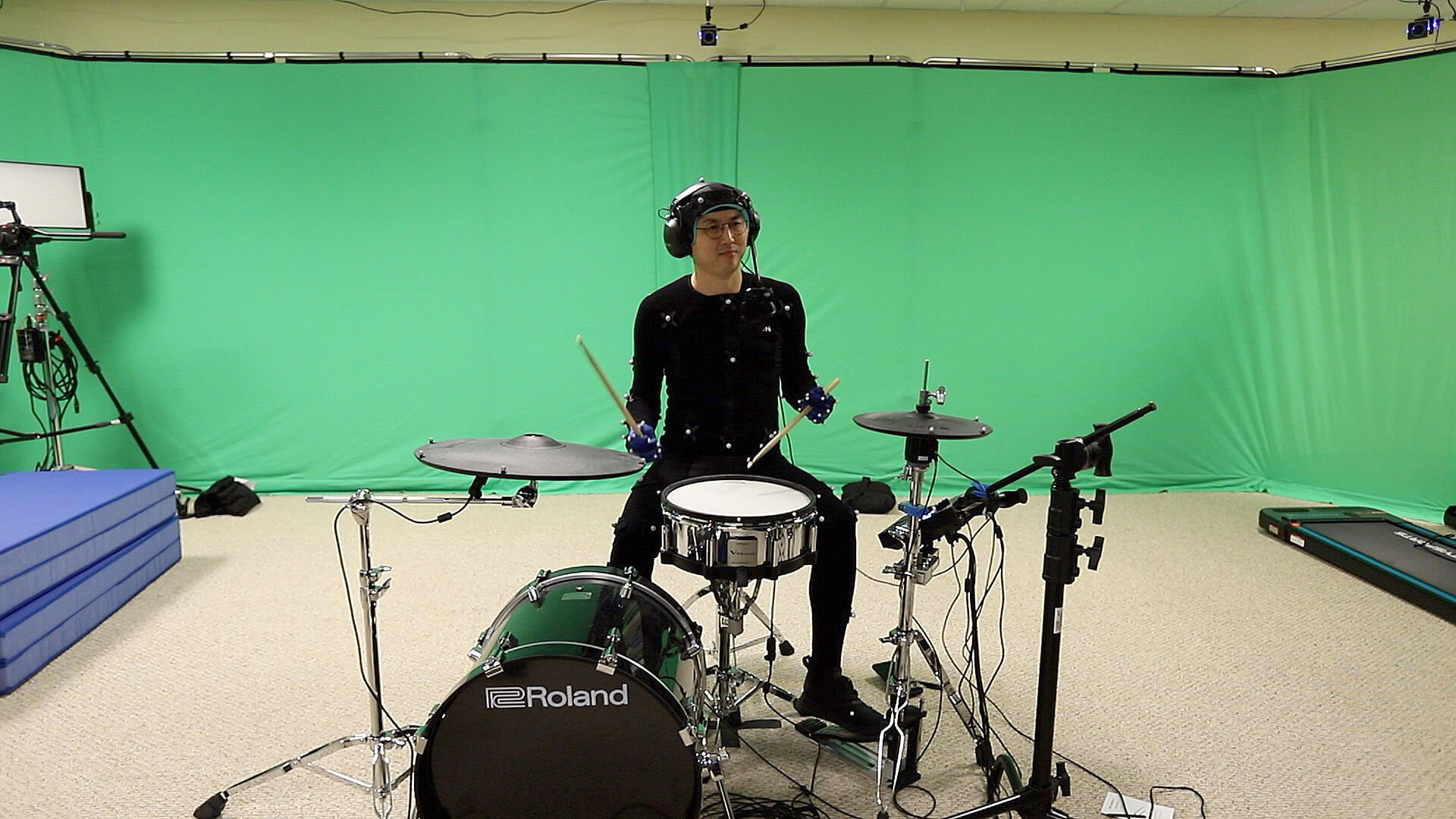
In "Going Live With MetaHumans," Vicon profiles Matt Workman, a developer who set up ten Vero cameras at home and used Vicon's Shōgun software connected to Unreal Engine to drive Epic's MetaHuman characters live. Workman is quoted saying that "with the Vicon systems though, you're not even necessarily going to need to clean up the mocap," contrasting the setup with inertial suits he describes as prone to battery drain and Wi-Fi drops during livestreams, and noting the hardware is "built for Nike and NASA" and can run for extended sessions. In "The Art of Digital Puppeteering," animation studio AMGI describes tracking human actors and retargeting the captured movement onto cartoon-proportioned characters rendered in Unreal Engine. AMGI's Chief Creative Officer Colin Brady is quoted saying "if there are two lungs in the body of what we're doing, they're Vicon and Unreal," and states the studio's motion-capture approach can produce "four minutes a week" of finished animation compared with roughly "four seconds a week" by hand, applying the technique to a work-for-hire project for Coldplay and an original property in development for Netflix.
Character versus company
The MetaHuman characters Workman animates and the cartoon characters AMGI retargets are the on-screen personas; the people who actually operate the pipeline are the named developer, the named studio and the actors performing on the capture stage, not Vicon itself. Vicon's role in both case studies is strictly as the underlying hardware and software vendor, supplying cameras and the Shōgun tracking system; it does not create, write or operate either set of characters. Keeping that distinction clear matters when a vendor's case study is read as if it described a persona's own production company, rather than one supplier among several in that company's pipeline.
What to watch
Both case studies are testimonial material Vicon selected and published itself, and the specific figures inside them, including AMGI's "four seconds" versus "four minutes a week" comparison, are Brady's own claims rather than an independently measured benchmark. This is an editorial caveat: these two named productions demonstrate what is possible in Vicon's own chosen examples, not a general claim about every studio using Vicon hardware for digital-human work.
- Has either named production, the MetaHuman clothing work or the AMGI series, been independently reviewed or covered outside Vicon's own case study?
- Do other motion-capture vendors publish comparable customer claims for similar digital-human or "digital puppeteering" pipelines?
- Does a specific persona this site tracks credit Vicon, or a competing system, in its own production notes?
Read as Vicon's own selected examples, the two case studies show a named developer and a named studio each using Vicon hardware differently, not a single, generalisable claim about digital-human production.
Source ledger.
- Going Live With MetaHumans ↗
Vicon's own case study naming a developer and describing his live MetaHuman capture setup and quotes.
Source publication: Not stated · Retrieved: 2026-09-16
- The Art of Digital Puppeteering ↗
Vicon's own case study naming AMGI and quoting its Chief Creative Officer on its motion-capture pipeline and output claims.
Source publication: Not stated · Retrieved: 2026-09-16