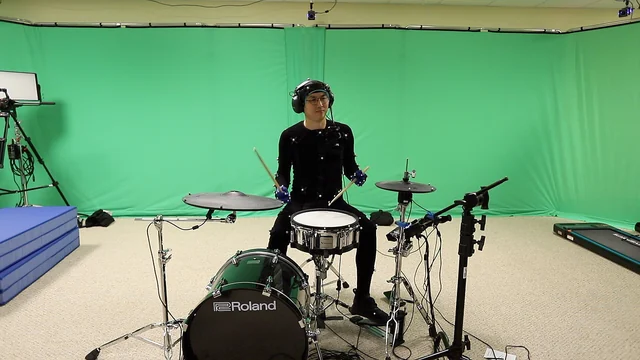
The persona
Siren is not a persona built for social media but a proof-of-concept digital character Epic Games introduced with 3Lateral, Cubic Motion, Tencent and Vicon. Modelled on the likeness of Chinese actress Bingjie Jiang and driven in performance by UK-based actress Alexa Lee, Siren was unveiled during Epic's keynote address at the Game Developers Conference on 21 March 2018, according to Vicon's dated press release, and later exhibited at FMX in Stuttgart the following month, as Epic's own recap post, published 18 April 2018 and bylined Dana Cowley, records.
What the documents establish
Epic's FMX recap post credits each partner with a distinct role: 3Lateral completed 3D and 4D scans of Bingjie Jiang and built the model, texture data and facial rig, applying its "Rig Logic" technology so the face could be "driven in real-time"; Cubic Motion handled "all of the live and offline facial performance capture, tracking, solving and animation" and supplied a live solver; Epic led look development and rendering inside Unreal Engine 4; and Tencent provided creative and technical guidance on the character's look. Vicon's press release adds that its Shōgun 1.2 software and a new Live Link plugin streamed Alexa Lee's body and finger data into Unreal Engine "at 60 frames per second," and that Vicon "solved directly onto the Siren custom skeleton," skipping a targeting step, while developing a new algorithm for finger animation.
Character versus company
Siren has no existence apart from the two performers and companies behind her: Bingjie Jiang supplied the scanned likeness, Alexa Lee supplied the driven performance, and the credited technical work belongs to Epic, 3Lateral, Cubic Motion, Tencent and Vicon, not a fictional persona with her own voice. The two sources also correct a natural misreading of "live." Vicon's release states plainly that "the real-time presentation displayed during Epic's keynote was previously recorded" at Vicon's Oxford stage, meaning the keynote audience watched a captured performance rather than an actress performing from scratch on stage. Separate, genuinely live demonstrations with Alexa Lee ran afterward at Vicon's GDC booth on 21 and 22 March. "Real-time" describes how the render pipeline processed the performance without pre-rendering frames; it does not mean the audience was watching a performer at that exact moment.
What to watch
Both companies frame Siren as a technology proof-of-concept, not a commercial persona, and its pipeline fed directly into later Epic acquisitions of 3Lateral and Cubic Motion and, eventually, the MetaHuman toolset. This is an editorial note: any later "real-time digital human" claim is worth checking against the same keynote-versus-booth distinction these documents draw for Siren.
- Was a given "real-time" or "live" digital-human demonstration performed in front of the audience, or captured earlier and played back?
- Which named studio was responsible for the face, the body and the render, and does a later claim credit the same companies?
- Did the underlying performance-capture technology go on to a commercial product, and under what name?
Read against its own primary sources, Siren was a carefully credited, multi-company technical demonstration, not evidence that a single actress became a virtual character live on a keynote stage.
Source ledger.
- Siren at FMX 2018: Crossing the Uncanny Valley in Real Time ↗
Epic's own credit list for 3Lateral, Cubic Motion, Epic and Tencent's respective roles in building Siren.
Source publication: 2018-04-18 · Retrieved: 2026-09-16
- Vicon Adds Lifelike Movement to Epic Games' Real-Time Digital Character 'Siren' ↗
Dates the GDC keynote reveal, names the performers, and states the keynote footage was pre-recorded while later booth demos were live.
Source publication: 2018-03-21 · Retrieved: 2026-09-16