The persona
No single persona anchors this entry; it examines a measurement source that other coverage sometimes leans on when discussing virtual influencers generally. Influencer Marketing Hub (IMH) is the publisher; its figures describe the influencer-marketing industry as its survey respondents reported it, not any one operator's business.
What the documents establish
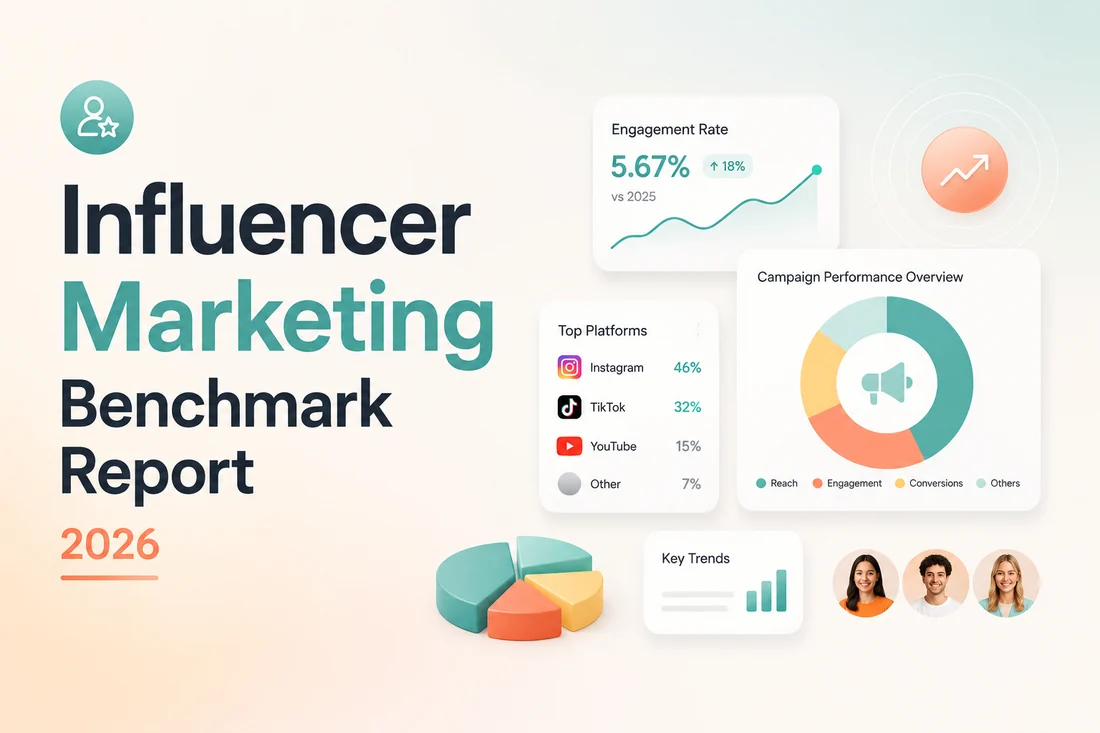
As retrieved on 16 September 2026, IMH's Influencer Marketing Benchmark Report 2026, last updated 4 May 2026, states it surveyed '600+' marketing professionals and reports findings using 'question-level denominators' and multi-select tallies that IMH itself warns can inflate totals; the report contains no market-size figure and does not name virtual influencers. A separate IMH page, 35 Influencer Marketing Statistics, last updated 19 August 2026, compiles figures from that same benchmark survey, such as a stated 56.5 percent share of fraud and quality issues attributed to fake or bot followers, alongside a distinct claim from a different company, Linqia, that '89% of enterprise marketers avoid virtual influencers,' which the statistics page attributes to Linqia by name rather than to IMH's own survey.
Character versus company
The distinction that matters here is which organisation actually measured what: figures IMH labels as coming from 'our 2026 Influencer Marketing Benchmark Report' are IMH's own survey data, while the virtual-influencer-avoidance figure sitting on the same compiled page originates with Linqia and is presented by IMH as Linqia's finding, not as IMH's own research. A reader who cites 'IMH's virtual influencer statistic' without checking this attribution would be crediting the wrong company for the underlying survey.
What to watch
IMH's benchmark report page carries a 2022 original publication date alongside its 2026 update, indicating the URL is a continuously refreshed evergreen page rather than a fixed, unchanging document; a citation to 'the 2026 report' should specify the retrieval date, as this entry does. The 89 percent Linqia figure was read only through IMH's summary of it, not through Linqia's own original report, which this entry did not independently open.
- Does a cited IMH figure come from IMH's own survey or from a third party IMH is summarising?
- What is the sample size and definition behind any specific percentage drawn from this page?
- Has the figure changed between the version retrieved here and a later visit to the same evergreen URL?
Read side by side, IMH's own benchmark survey and its statistics compilation show how one publisher's page can mix its own measured data with another firm's claim, making attribution, not just the number itself, the detail worth checking before any virtual-influencer statistic is repeated.
Source ledger.
- Influencer Marketing Benchmark Report 2026 ↗
IMH's own 600+ respondent survey methodology and its statement of limitations on multi-select and ranking questions.
Source publication: 2026-05-04 · Retrieved: 2026-09-16
- 35 Influencer Marketing Statistics on Budgets, ROI, AI, and Platforms ↗
Shows IMH's own benchmark-derived figures alongside a separately attributed Linqia claim about virtual influencers.
Source publication: 2026-08-19 · Retrieved: 2026-09-16