The persona
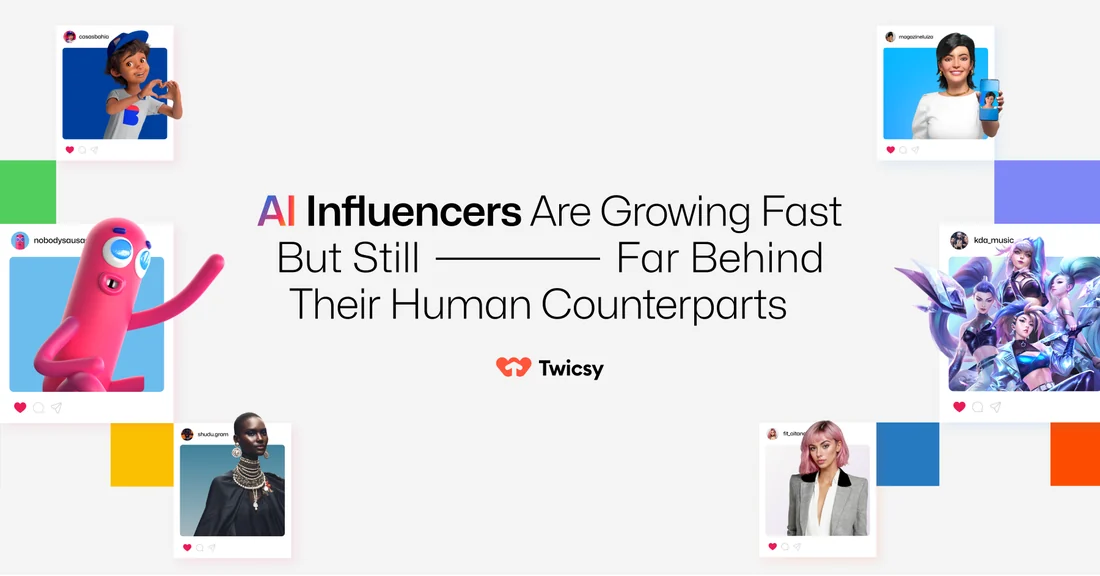
This note covers no single persona but a comparison a commercial vendor published about the category. Twicsy, a company that sells Instagram, TikTok and YouTube followers, likes and views starting at $1.99 per package, published a study titled "AI Influencers vs Human Influencers", comparing engagement and earnings between AI-generated personas and human creators. The report names Lil Miquela and Imma among its examples of the category before turning to a dataset it does not identify account by account.
What the documents establish
Twicsy's methodology section states the company "gathered a list of 114 AI influencer accounts using Instagram recommendations and Starngage" and matched each to 100 human accounts "with similar demographics and follower counts," for a stated total of 11,514 influencers examined. It attributes earnings and engagement-rate figures to HypeAuditor and likes-and-comments counts to a service it calls "MarketingHub." On that basis, the report states human influencers earned an average of $78,777 per post against $1,694 for AI influencers, a 46-times gap, and that sponsored posts from human influencers drew 187,039 likes and 2,049 comments on average against 86,786 likes and 1,953 comments for AI influencers, a difference it calls 266% more engagement.
Character versus company
The AI-influencer accounts in the sample are themselves operator-run characters, each with production and account-management decisions behind the numbers Twicsy tallies. But the sharper character-versus-company point here is Twicsy's own. Its own site describes a business built on selling followers, likes and views to any buyer, which makes it a company with a direct commercial stake in how "engagement" gets defined and priced. That does not make its arithmetic wrong, but it means a report ranking which kind of influencer generates more paid engagement comes from a vendor whose core product is manufacturing exactly that metric for its own customers. The finding is this vendor's tabulation of data licensed from HypeAuditor and another provider, not an audited, independent study.
What to watch
The report does not publish the 114 account handles it analyzed, so its AI-influencer sample cannot be independently checked, and no collection period or publication date appears on the page. This is an editorial caveat: "AI influencer" is not a defined, disclosed category here, only accounts Twicsy identified through Instagram's recommendation feature and a third-party listing site, which may not represent the wider population of virtual personas this site tracks.
- Which specific accounts made up the 114-account AI sample, and were any of them personas already well documented?
- Over what period was the underlying HypeAuditor and MarketingHub data collected?
- Does a vendor that sells engagement metrics have a stake in how "engagement" gets defined in its own published comparisons?
Read as one vendor's tabulation rather than an industry consensus, the comparison is a data point about a specific, undisclosed sample, not a verdict on virtual personas generally.
Source ledger.
- AI Influencers vs Human Influencers ↗
Twicsy's own methodology, sample size and its engagement/earnings comparison figures.
Source publication: Not stated · Retrieved: 2026-09-16
- About Twicsy ↗
Establishes that Twicsy itself sells Instagram/TikTok/YouTube followers, likes and views.
Source publication: Not stated · Retrieved: 2026-09-16