The persona
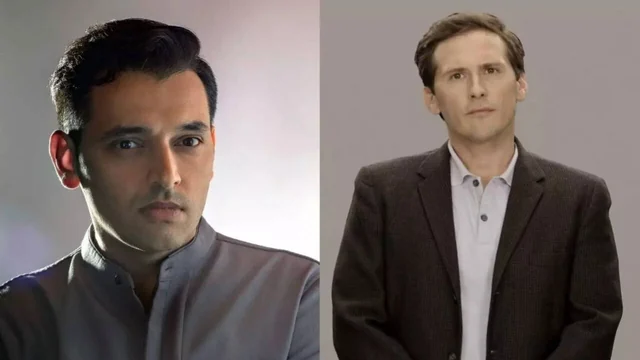
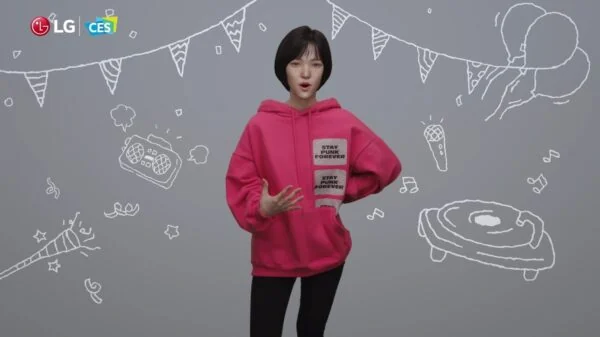
Neon is a line of computer-generated 'artificial humans' introduced by Samsung's STAR Labs (Samsung Technology Advanced Research Labs) at CES in January 2020. STAR Labs' own homepage, captured by the Wayback Machine on 10 January 2020, described named figures such as Frank, Natasha and Hana as beings that 'look and behave like a real human,' powered by a rendering and behavior system the site called CORE R3. STAR Labs' president and chief executive, Pranav Mistry, presented the project publicly at the CES demonstration, as recorded in a contemporaneous Indian Express interview published two days after the show opened.
What the documents establish
The 2020 archive records STAR Labs' own promises: 'realtime' response 'with latencies of less than a few microseconds,' multilingual conversation, and 'privacy by design.' The current neon.life homepage, retrieved 16 September 2026, still lists three product lines called NEON View, NEON Frame and NEON Studio, each labelled 'Coming 2022' and linked to a whitepaper, unrevised more than four years past that date. Its Newsroom page returns a 404 error and its About Us page returns 403, and the site's hosting now runs on a general-purpose consumer host rather than dedicated infrastructure. The Indian Express piece separately names STAR Labs, not Samsung's main consumer division, as the entity running the demonstration, and notes Mistry appeared without the parent company's branding.
Character versus company
Frank, Natasha and Hana are demonstration characters, not independent products with their own accounts or public statements; any claim made in their voice is properly a claim by STAR Labs about its own rendering technology. STAR Labs is the operator on record, and the current site's own text never names Samsung directly, a distinction Mistry's own interview draws attention to. No document opened for this note states that Samsung or STAR Labs discontinued Neon; what can be verified is only that the site's outward-facing promises and navigation have not been updated since the period the pages themselves reference.
What to watch
Whether STAR Labs or Samsung issues any statement addressing Neon's status, whether the site's 'Coming 2022' language is ever revised, and whether the Newsroom or About pages return would each narrow the uncertainty here. Reading a stalled roadmap and broken internal links as evidence of quiet abandonment, rather than confirmed closure, is an editorial inference beyond what any single source states outright.
- Has STAR Labs published anything about Neon since its CES 2020 and 2021 appearances?
- Does the current site's hosting and broken navigation reflect neglect, a pending relaunch, or something else?
- Would a persona's continued web presence, absent an operator statement, count as evidence the project is active?
Neon's own record is a case where absence of a statement is itself the available evidence: a promised 2022 product line still marked as forthcoming in 2026, on a site whose own internal pages no longer resolve.
Source ledger.
- Neon homepage, archived 10 January 2020 ↗
Records STAR Labs' own January 2020 description of Neon's artificial humans, CORE R3 technology, and design claims.
Source publication: Not stated · Retrieved: 2026-09-16
- Neon homepage (neon.life) ↗
Shows the current site's unrevised 'Coming 2022' product roadmap and non-resolving Newsroom and About pages, retrieved 16 September 2026.
Source publication: Not stated · Retrieved: 2026-09-16
- Maker of dreams and artificial humans: Meet Pranav Mistry, the brain behind the Neon project ↗
Independent reporting naming Pranav Mistry as President and CEO of STAR Labs as the operator behind Neon at CES 2020.
Source publication: 2020-01-12 · Retrieved: 2026-09-16