Source record
Put the speaker before the model
ElevenLabs' current help page says a Professional Voice Clone can only be made by the person whose voice it is, even when another person has consent. The voice owner completes verification on their own account and may share the verified voice privately. That is one vendor's current product rule, not a complete consent standard for every service or jurisdiction.
The operational principle is still useful: identify the human voice owner before identifying a model. Record who controls the account, who may generate speech, the allowed character and channels, prohibited subjects, approval expectations, duration and a way to withdraw future use.
Evidence: ElevenLabs Help Center [s1]
Editorial analysis
Separate permission from production
Keep a permission record beside, but not inside, the audio project. It should identify the speaker and agreement version without exposing unnecessary personal data to every editor. The production package should reference the permission record, the synthesis service and voice identifier, the approved script, pronunciation decisions, generated takes and human edits.
Consent to create a voice is not automatically consent for endorsements, political speech, adult material, model training, resale or indefinite reuse. Treat each proposed expansion as a new approval question. This is workflow guidance, not legal advice; counsel should set contract language and jurisdiction-specific requirements.
Source record
Keep three audio layers
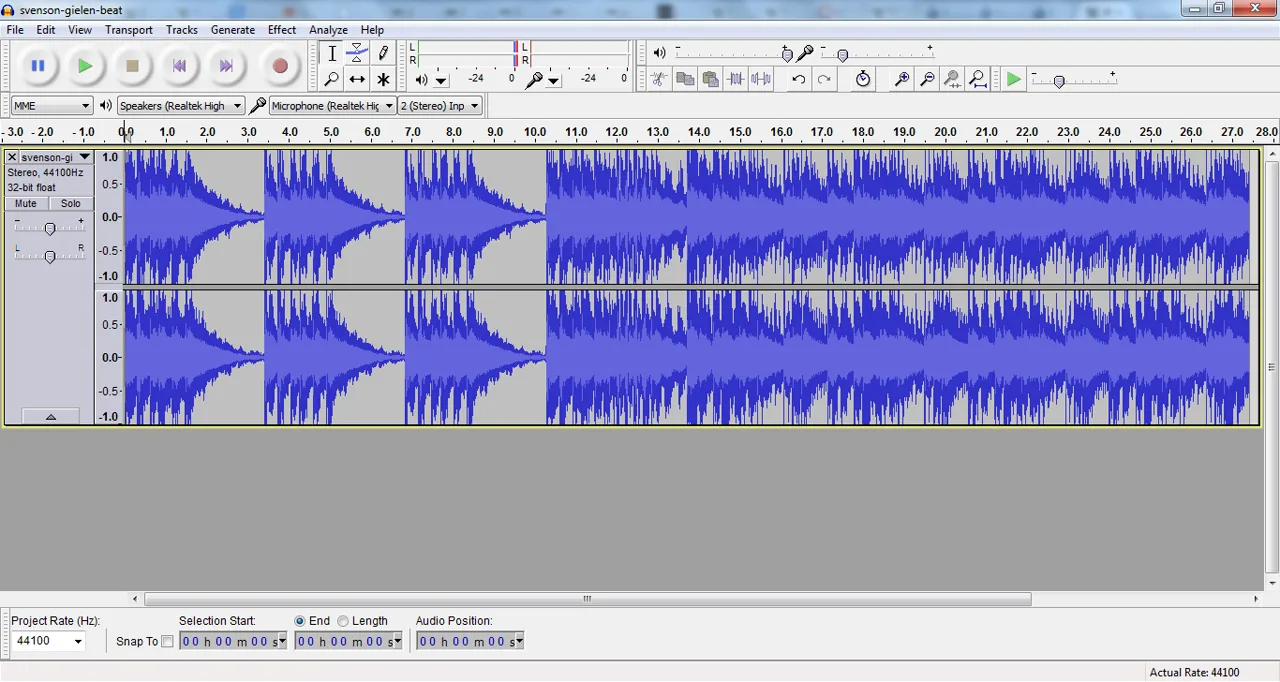
Audacity's current manual distinguishes an editable project from a finished export. Its project retains tracks, clips and edits; its export command creates the ordinary audio file sent elsewhere. The export documentation also supports selected-audio and full-project output. This distinction applies beyond Audacity: preserve the editable session, neutral interchange stems and delivery mix as separate layers.
For a portable package, retain lossless dry speech, processed voice, music and effects as aligned stems; the approved final mix; the script with pronunciation notes; and a plain manifest naming sample rate, channels, start time and tool versions. Do not assume a proprietary voice can be exported from a service merely because generated audio can.
Evidence: Audacity Manual [s2] · Audacity Manual [s3]
Practical application
Run a revocation drill
Worked example: the voice owner withdraws permission for new sponsored posts on Monday. The operator disables shared access, records the request and effective scope, removes the voice from queued jobs, identifies scheduled and published assets, and routes disputed existing uses for qualified review. The team does not delete evidence of the request or promise that every historical use can be erased.
Test this drill before launch. One person should be able to find the account owner, active users, queued scripts, archive, vendor support path and public correction owner within an hour. Record gaps. A stop path that depends on the unavailable producer's memory is not a control.
Practical application
Verify the handoff without regenerating
Give another editor the local package without vendor credentials. Ask them to replace one sentence using an already approved take, adjust music, export the delivery format and trace the voice permission reference. Then ask what cannot be changed without returning to the synthesis service. Those answers define the real portability boundary.
Review access quarterly and after every personnel change. Reconfirm that the named voice owner still controls sharing, revoke dormant collaborators and compare published credits or disclosures with the approved wording. The result is not a legal certificate; it is an inspectable operating record.
Source ledger
What this rests on.
- Can I create a Professional Voice Clone of someone else's voice? ↗
ElevenLabs Help Center · Primary source
Source publication: Not stated by source · Reviewed: 19 September 2026
States that Professional Voice Clones can only be created by the voice owner, require verification and can then be shared privately by the owner.
- Save your project ↗
Audacity Manual · Primary source
Source publication: Not stated by source · Source updated: 14 September 2026 · Reviewed: 19 September 2026
Distinguishes the editable Audacity 4 project from finished exports and documents local or cloud project storage.
- Export your audio ↗
Audacity Manual · Primary source
Source publication: Not stated by source · Source updated: 14 September 2026 · Reviewed: 19 September 2026
Documents mixdown and selected-audio export, including format, channel and sample-rate choices.