Source record
The documented change
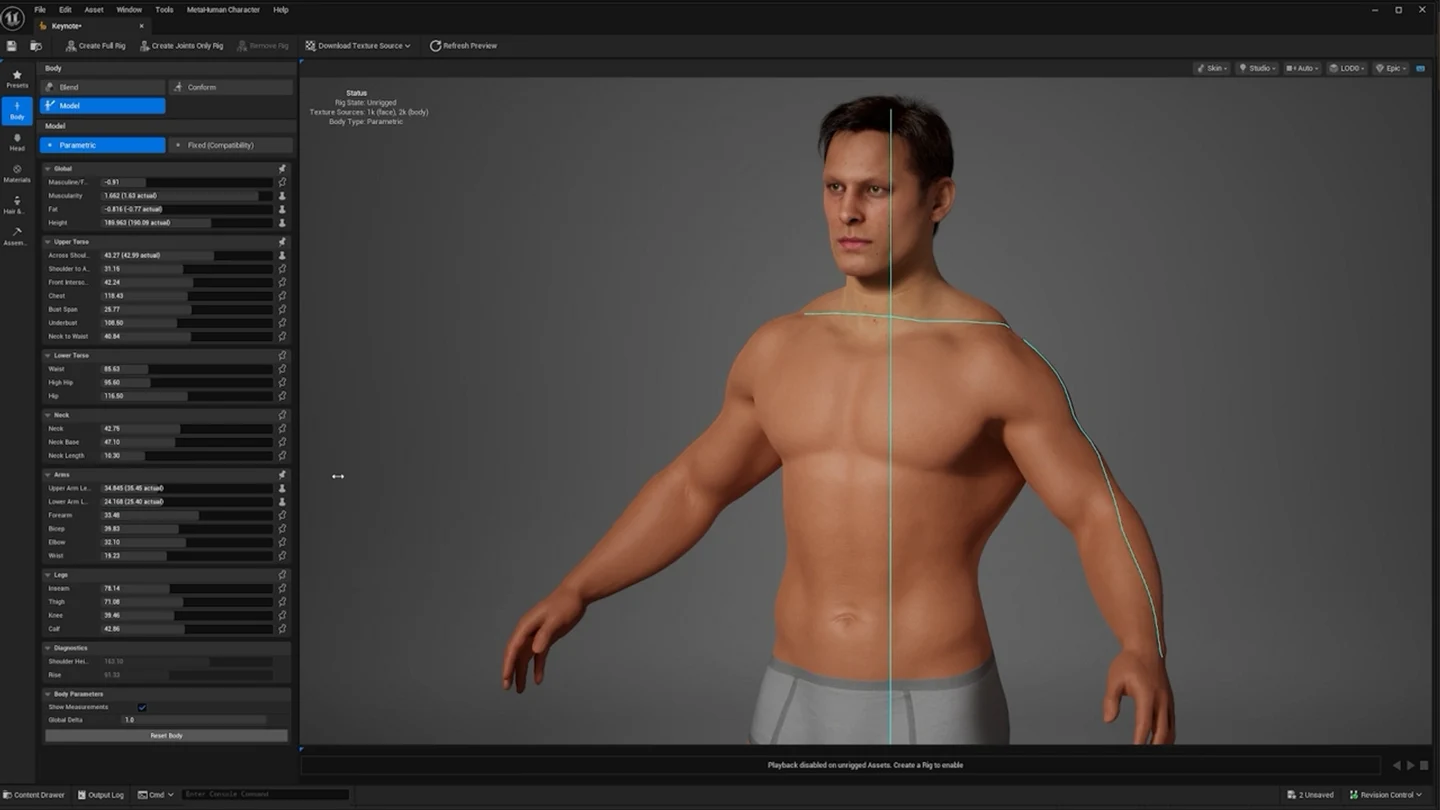
Epic announced on 3 June 2025 that MetaHuman 5.6 was leaving Early Access. Creator moved into Unreal Engine; camera and audio inputs gained expanded animation options, and Maya and Houdini workflows widened the production toolchain. Local authoring did not mean every operation became offline: the announcement still describes cloud-assisted autorigging and texture synthesis.
Evidence: Epic Games / MetaHuman [s1]
Source record
License the intended workflow
Epic's current licensing summary says MetaHuman falls under the standard Unreal license, is free below its stated US$1 million revenue threshold, and can be used with other engines or creative software. That summary points to more detailed terms. Export capability is not evidence of unrestricted rights to train a model, use a purchased accessory, or copy someone's likeness.
Evidence: Epic Games / MetaHuman [s2]
Editorial analysis
Separate identity from delivery
For a virtual influencer, the useful unit is not the last attractive image. It is a reproducible identity: proportions, reference angles, expression range, voice direction, wardrobe rules and the editable assets that generated them. The finished Instagram portrait is one delivery file. The character base should survive a change of platform or renderer.
This does not make 3D the correct answer for every creator. A carefully maintained illustration or reference-image workflow can suit a small editorial series. The decision depends on how often the character must turn, speak, interact with products, or appear live. Production complexity should follow the required performance, not the prestige of the software.
Practical application
Build a repeatability test
Before a launch, produce the same neutral close-up twice from the saved project, then try a profile, a smile and an unfamiliar lighting condition. Save approved comparisons alongside rejected frames. Record the tool and version, lighting, camera, wardrobe source and voice permissions used for each deliverable.
Next, ask another operator to reproduce one approved frame using only the package. Missing textures, forgotten reference images and undocumented settings become obvious quickly. Use that handoff to estimate revision time. A working scene, its source files and a short decision log are more valuable to a future team than a folder of polished exports with no lineage.
Editorial analysis
Treat updates as production changes
A software update may improve a face and still break continuity with the previous season. Keep a comparison scene and review it before replacing a working pipeline. Decide which differences are acceptable, whether old episodes need new versions, and who approves a change in the character's appearance. Those are editorial and operating decisions as much as technical ones.
Source ledger
What this rests on.
- MetaHuman leaves Early Access with a feature-packed new release ↗
Epic Games / MetaHuman · Primary source
Source publication: 3 June 2025 · Reviewed: 16 September 2026
MetaHuman 5.6 brought Creator into Unreal, expanded camera/audio animation and introduced new licensing and DCC workflows. The announcement also says cloud services still support autorigging and texture synthesis.
- MetaHuman licensing ↗
Epic Games / MetaHuman · Primary source
Source publication: Not stated by source · Reviewed: 16 September 2026
Current summary places MetaHuman under the standard Unreal license, identifies a $1m revenue threshold, permits other engines/creative software and points to detailed terms. It does not establish unconditional rights for every AI use.