The persona
UneeQ is a technology company, not a single character, whose business is building interactive figures called digital humans that other organizations then present as their own spokespeople, concierges or trainers. As retrieved on 16 September 2026, the company's site now operates at digitalhumans.com rather than its earlier uneeq.com address, though the UneeQ name persists in its product. The company's own history page states it was founded in 2016 from a project to help people with disabilities access information through conversation, and that its first notable creation was Nadia, a digital human voiced by the actor Cate Blanchett and built for Australia's National Disability Insurance Scheme.
What the documents establish
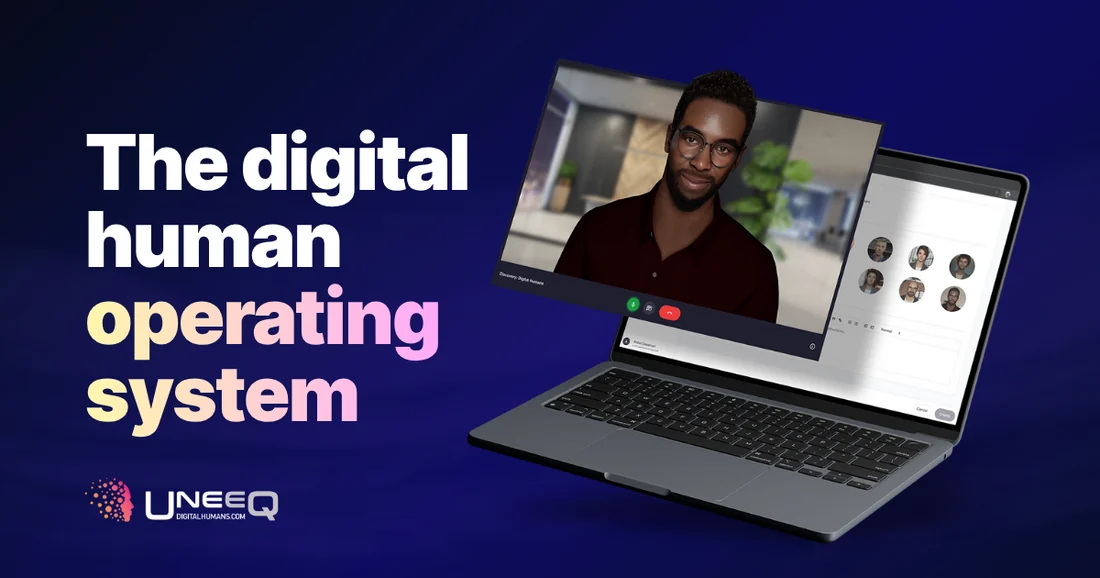
UneeQ's own platform page describes a product it calls the Digital Human Operating System, stating plainly that organizations 'build digital human experiences into their products, apps, websites, or anywhere else they need an engaging, humanlike touchpoint,' with concierges, kiosks and brand ambassadors given as examples. The same page states a specific ownership term: 'You own your digital human -- your custom character is built on open standards, so it leaves with you if you ever leave us.' UneeQ's about page adds that the company now serves what it calls the world's leading enterprises across the United States, Canada, Australia, New Zealand and Europe, condensing what it describes as ten years of research and development into the current product.
Character versus company
The operative distinction is between any individual digital human a client deploys, whose script, voice and branding belong to that client under UneeQ's own stated ownership terms, and UneeQ itself, which supplies and maintains the underlying operating system, its real-time response technology, and support infrastructure. A claim made by a specific deployment, such as an airline's or bank's own digital assistant, is that client's material, not UneeQ's, even when it runs on UneeQ's platform. UneeQ's own pages describe the platform's capabilities and client list in general terms and should not be read as a verified account of any single client's results.
What to watch
The move from uneeq.com to digitalhumans.com, and the platform's current emphasis on workplace roleplay and training rather than its earlier framing around public-facing brand spokescharacters, is a documented shift in positioning worth tracking against the company's own future statements. This reading is editorial, drawn from comparing the current site to the founding narrative it still publishes.
- What prompted the move from the UneeQ domain and framing to the Digital Humans branding?
- Which named enterprises currently deploy the Digital Human OS, and what do those organizations themselves say about it?
- Has UneeQ published technical detail on Synanim, the animation system its about page names, beyond marketing language?
Read on its own terms, UneeQ presents itself less as a character in the way Neon or Aitana are and more as infrastructure: a company whose product is the ability for other organizations to operate a digital human as though it were their own.
Source ledger.
- Digital Human OS platform overview (digitalhumans.com, formerly UneeQ) ↗
UneeQ's own platform page describes the Digital Human OS, brand-ambassador and concierge use cases, and its stated client-ownership terms.
Source publication: Not stated · Retrieved: 2026-09-16
- About UneeQ / Digital Humans (company history page) ↗
UneeQ's own history page states its 2016 founding, the Nadia deployment for Australia's NDIS voiced by Cate Blanchett, and its current enterprise client base.
Source publication: Not stated · Retrieved: 2026-09-16