The persona
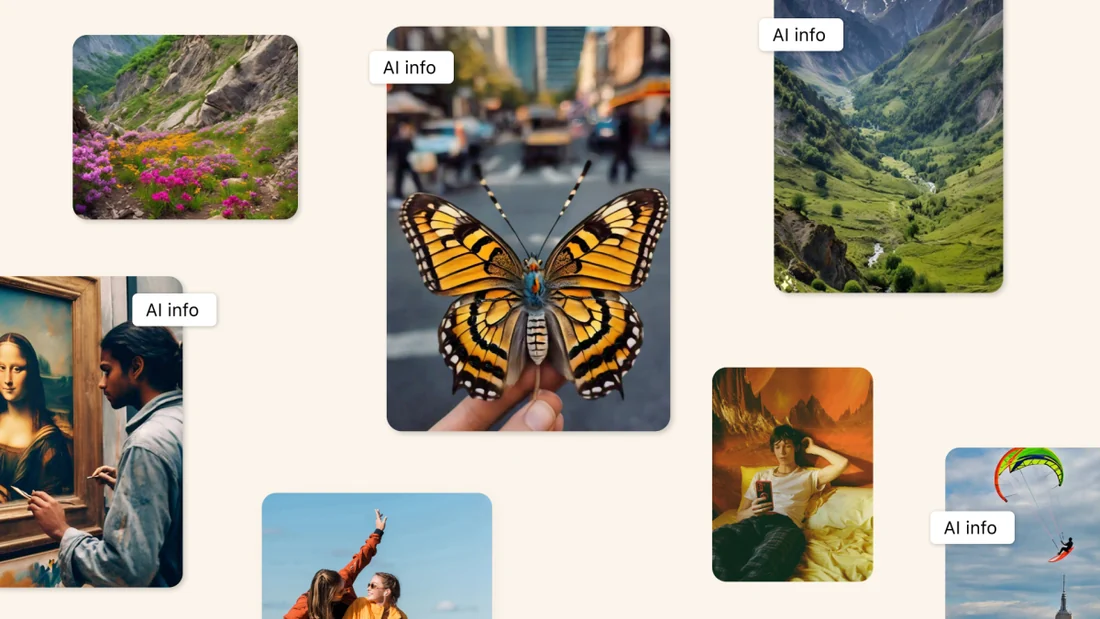
The document at issue governs labels, not a character. On 5 April 2024, Meta published a newsroom post describing an expanded 'AI info' label applied to video, audio, and image content across Facebook, Instagram, and Threads when Meta detects industry-standard technical markers of AI generation or when a user discloses it. The post states plainly that any account, human-run or operator-run, is subject to the same detection-or-disclosure logic; a virtual persona's posts are treated as content from whoever operates the account.
What the documents establish
Meta's post attributes the policy shift to feedback from its Oversight Board, quoting the board's view that removing manipulated media risks 'unnecessarily restricting freedom of expression,' and states that Meta will instead 'keep this content on our platforms so we can add labels and context' unless it separately violates other rules. Meta's living Community Standards page on misinformation, last updated 7 April 2025 as retrieved, extends this into a standing rule: photorealistic, digitally altered image, video or audio content carrying a 'particularly high risk of materially deceiving the public' gets a label, and posters must disclose organic AI-altered content themselves.
Character versus company
Nothing in either document evaluates a persona's claimed authenticity or feelings about being AI-generated; both describe a moderation and labelling mechanism operated by Meta. When a virtual influencer's account posts a synthetic image, the label attaches to the post based on technical detection or the operator's own disclosure choice, not on any narrative the character offers about how the image came to exist. The distinction matters because a persona's in-character claim to be 'real' or 'unedited' is the operator's material and carries no weight against Meta's detection systems or its labelling duty.
What to watch
Meta's own page shows updates continuing through October 2025, so the detection criteria and label design are still moving; a description of the 'AI info' label from 2024 alone risks going stale. It is worth tracking whether Meta applies the same detection standard evenly to accounts explicitly built around synthetic imagery, since the misinformation standard is written around deception risk rather than account type. This is an editorial question the cited pages do not answer.
- Was the label applied through detection, through the poster's own disclosure, or manually after review?
- Does the labelled content also trigger a Community Standards enforcement action, or only a label?
- How has the detection or labelling criteria changed since the April 2024 announcement?
The shift from removal to labelling changes what a viewer sees, not who is accountable for what was posted; that accountability question still resolves to the operator behind the account.
Source ledger.
- Meta's Approach to Labeling AI-Generated Content and Manipulated Media ↗
Meta's own announcement of the expanded AI info label, its detection-or-disclosure criteria, and the Oversight Board's role in the shift away from removal-first handling.
Source publication: 2024-04-05 · Retrieved: 2026-09-16
- Misinformation (Community Standards) ↗
Meta's living Community Standards text implementing labelling for high-risk manipulated media and requiring posters to disclose organic AI-altered content, as retrieved.
Source publication: 2025-04-07 · Retrieved: 2026-09-16